Visit by the Citcom.ai-UV team to the hydrographic vessel ‘Tofiño’: the lifecycle of maritime data
Last Wednesday, 10th of June, we had the opportunity, as members of the CitCom.ai-UV research team, to go on a very special technical visit to the Valencia Marina: we boarded the hydrographic vessel ‘Tofiño’ (A-32), which belongs to the Spanish Navy Hydrographic Institute (Instituto Hidrográfico de la Marina, IHM, in Spanish).
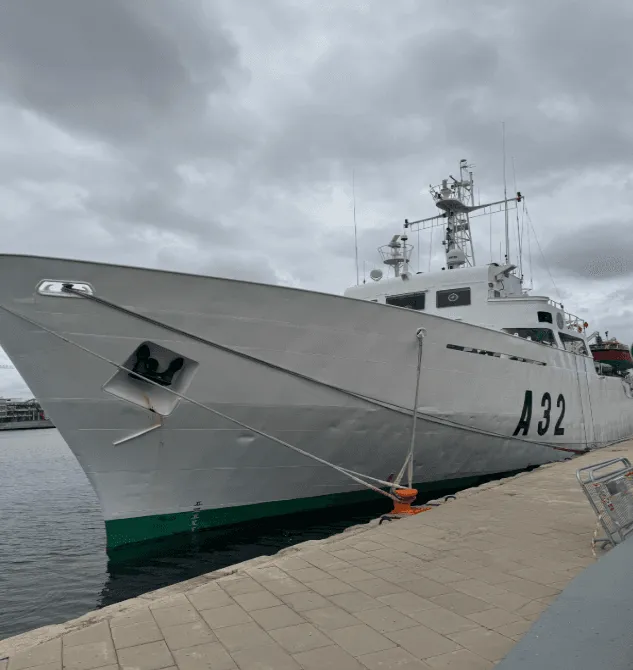
Although the purpose of the visit was not directly linked to our current work on the CitCom.ai project, as enthusiasts of technology and data management, spending time with the crew was an invaluable experience.
From raw data to nautical charts: a display of precision
During our visit, we were able to gain an in-depth understanding of the fascinating process of monitoring and extracting bathymetric data and seabed topography. It was particularly enlightening for the team to observe how the crew manages the entire information cycle: how they transform massive volumes of raw data into highly accurate information which is ultimately used, following a lengthy processing procedure, to produce the government’s official nautical charts.
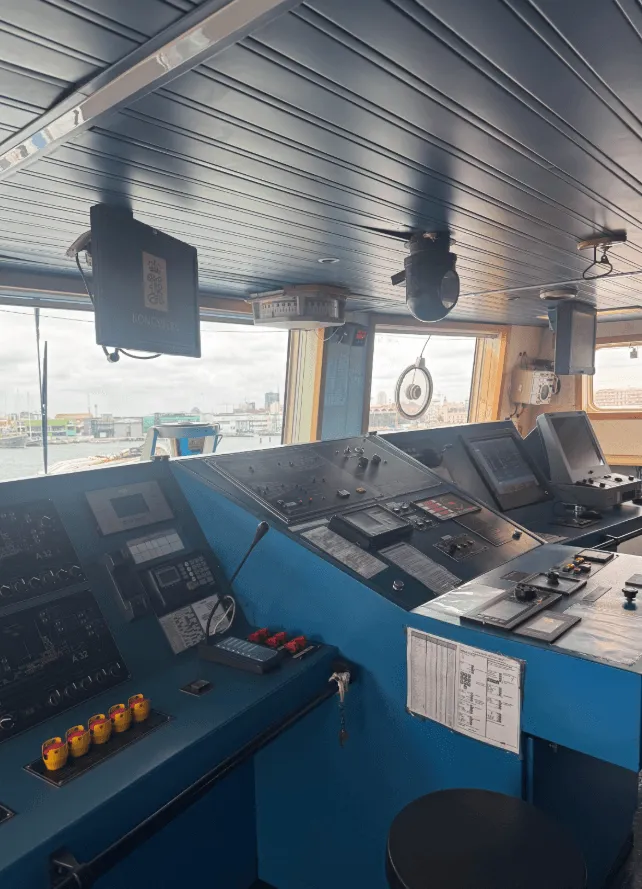
Beyond the technical complexity, the visit allowed us to immerse ourselves in the human side of the ‘Tofiño’. We had the opportunity to gain an insight into the crew’s daily routine, discovering what life is like on board during the months their missions at sea last. Learning about this aspect left us with a deep admiration for the enormous dedication, discipline, and coordination required to carry out their duties.
It is true that in our research team we also work with data, applying data science for a variety of purposes, albeit more closely related to tourism and the urban environment. However, seeing how another such rigorous discipline makes the most of the data lifecycle—from the moment the data is recorded by the ship’s advanced instrumentation and tools until it becomes the final map—reminds us that, regardless of the environment (maritime or urban), the key to the future lies in the quality of information extraction and processing.
Finally, we at CitCom.ai-UV would like to express our sincere thanks to the entire crew of the ‘Tofiño’ and the Spanish Navy Hydrographic Institute for their hospitality and their time. We would like to give a special mention to Luis Miguel Rioja Gallo, the ship’s lieutenant commander, for his impeccable work in technical outreach and for opening the doors to what is, without a doubt, a true example of precision, rigour and public service.