Data guiding decisions: what do Valencia's tourism surveys teach us?
Tourism is one of the fundamental economic activities in the Valencian Community, largely due to the high volume of visitors it receives each year. This very magnitude makes tourism a particularly valuable source of information: knowing how our visitors travel, what they demand and what their expectations are allows us to better understand a phenomenon that has a direct impact on the economy and service planning.
An analysis based on millions of real interactions collected at Turisme GVA tourist information offices.
In this context, our IDAL's (Intelligent Data Analysis Laboratory) research team from the University of Valencia, as part of the Citcom.ai project, has initiated a use case focused on analysing surveys collected at tourist information offices managed by Turisme GVA between 2016 and 2024. This is a particularly relevant dataset because it does not come from automated forms, but from real interactions recorded by office staff.
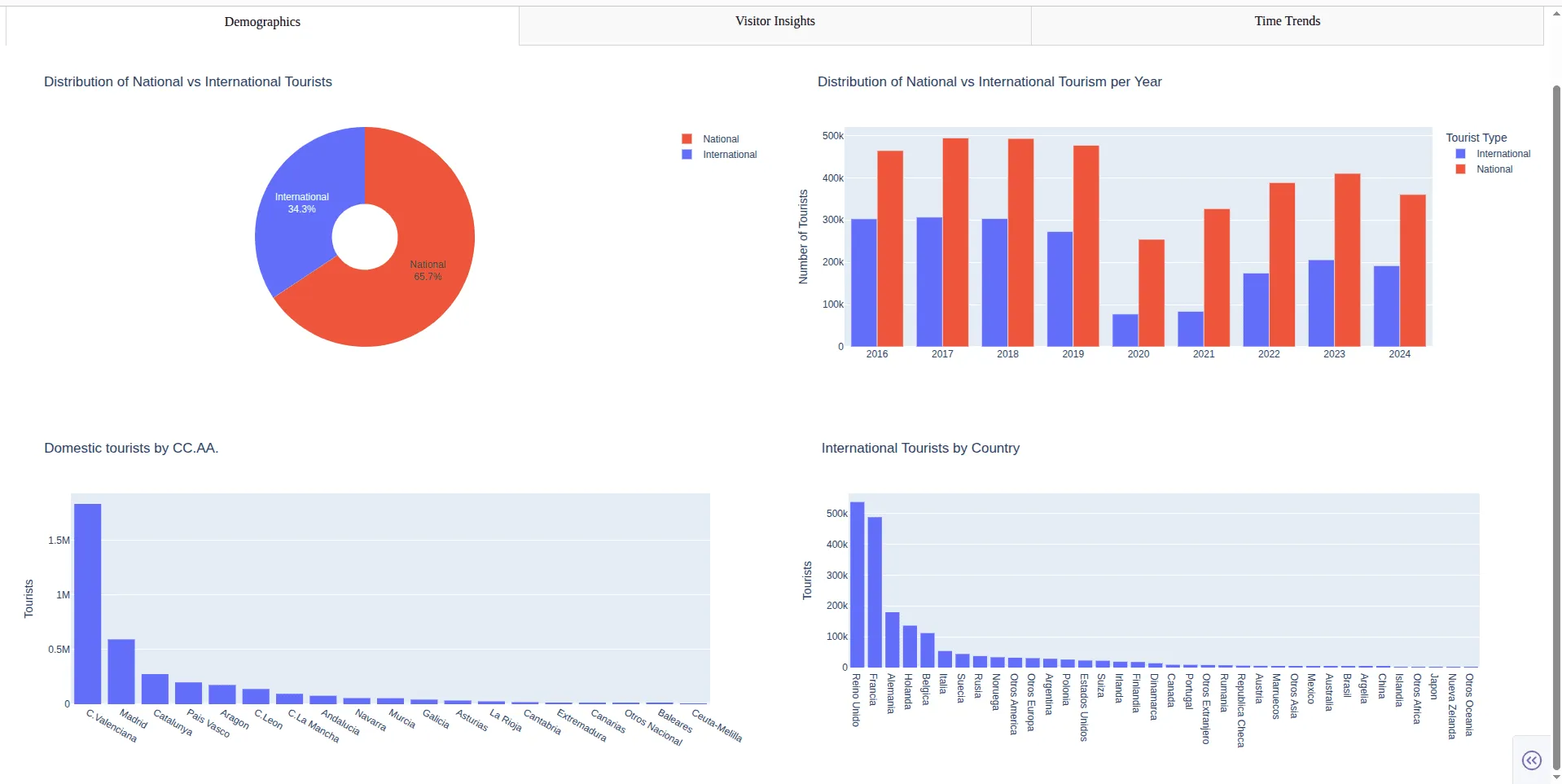
Each entry reflects direct contact with a tourist: their origin, the size of the group, the type of enquiry, the channel used, or the specific requests that motivated the visit. Analysing these records provides insight not only into the volume and origin of visitors, but also into what services they are looking for, when they need them, and how they prefer to communicate. In short, they provide an understanding of the behaviour and actual demand for services among tourists.
The analysis carried out allows us to identify significant patterns and draw some conclusions. For example, it confirms that most interactions continue to take place in person, which underlines the importance of maintaining sufficient resources at strategic points.
However, it also shows that digital channels are underused, which opens the door to new strategies to attract younger audiences or facilitate quick enquiries without the need to travel. Likewise, knowing which nationalities generate the highest demand helps to better target the production of multilingual materials and distribute resources efficiently among offices.
In addition to extracting useful information, the analysis allows for the evaluation and improvement of the data collection processes themselves. The standardisation of categories, the inclusion of new variables, and the reinforcement of consistency between offices are key steps in harnessing the full potential of this information in future studies.

Taken together, this use case lays the foundation for more informed tourism management, capable of adapting schedules, reinforcing offices according to demand, promoting lesser-known areas when certain attractions are saturated and, ultimately, allocating resources efficiently and thereby improving the experience of those who visit the Valencian Community.
If you find this type of data-driven analysis useful and would like to better understand how it could be applied to your field, or if you are considering developing your own solution to convert your surveys or records into strategic information, please do not hesitate to contact us. All contact information is available on our website.
The authors would like to thank the Regional Ministry of Innovation, Industry, Trade and Tourism (Conselleria d'Innovació, Indústria, Comerç i Turisme de la Generalitat Valenciana) for its funding under Grant Agreement No. 101100728, as part of the European Commission’s Citcom.ai project.