X-ray of tourists in Valencia through VTCs: intelligent segmentation of usage patterns
As part of our collaboration with Visit Valencia, a public-private entity dedicated to promoting and managing tourism in the city, our IDAL's (Intelligent Data Analysis Laboratory) research team from the University of Valencia has developed, within the Citcom.ai project, a new use case for Artificial Intelligence applied to tourism management: an advanced analysis system to better understand how Valencia Tourist Cards (VTCs) are used and what behaviour patterns visitors who purchase them follow.
The VTC is one of the most important tools for getting around Valencia as a tourist: it allows access to public transport, visits to museums and monuments, and enjoyment of various cultural activities. However, behind each card there is also a valuable opportunity to better understand how tourists move around the city, which neighbourhoods they visit, which services they use, and at what times of the year the highest concentrations of visitors occur.
In short, VTCs become a very useful source of information for detecting trends in different areas of the city based on how they are used. With this project, the idea was to be able to use and transform all this information — always anonymously and respecting the privacy of tourists' data — into useful knowledge for planning more efficient, balanced and sustainable tourism.
To this end, we analysed VTC usage data for 2022 and 2023, including anonymous public transport transactions (underground and bus), museum admissions and activities managed by Visit Valencia, as well as purchase information such as the visitor's country of origin or the point of sale of the card.

With this data set, we were able to carry out both a spatial and temporal study, which allowed us to detect tourist hotspots in different neighbourhoods, measure concentration levels to identify possible saturation situations and, in general, observe the evolution of visitors throughout the year and detect various seasonal trends, fluctuations in tourist presence and significant differences between neighbourhoods depending on the month. To facilitate interpretation, we also developed an animated GIF that shows the evolution of tourist flows in the city in a dynamic and visual way.
Clustering: from big data to defined profiles
At the heart of the project was an intelligent segmentation process, which aimed to group tourists according to their real behaviour: frequent routes, mobility habits, cultural preferences, points where they purchase their travel cards, or intensity of public transport use. Thanks to this classification, it is possible to design experiences that are more tailored to each type of visitor, optimise services such as transport or capacity management, and support both Visit Valencia and public administrations in strategic decision-making.
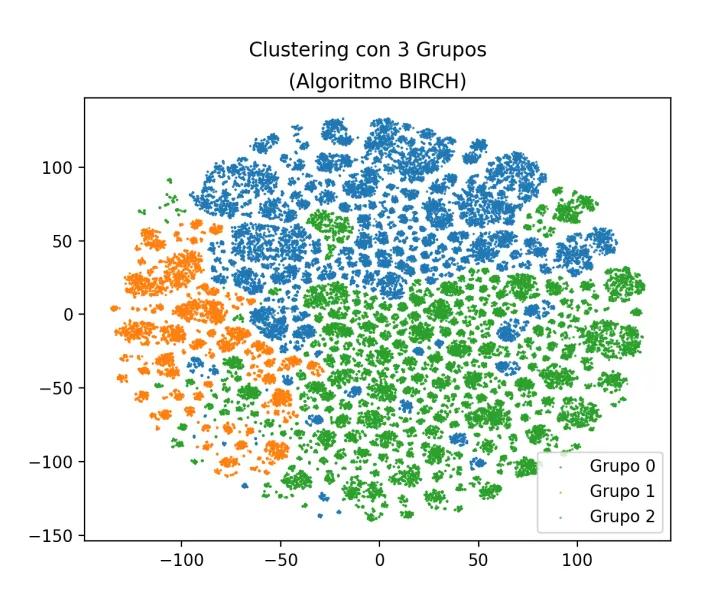
This analysis opens the door to more informed and proactive tourism management, moving from reacting to evidence to predicting and taking early action based on data provided by past events, as understanding how visitors are distributed throughout the city, when peaks in activity occur, or which profiles use certain services more intensively allows for more accurate planning, balancing flows, anticipating problems, and improving the overall tourist experience. With initiatives such as this, Valencia continues to move towards a Smart City model, where data and AI become key tools for a more sustainable, orderly and friendly city for both those who live there and those who visit it.
Did you like this article or think we can help you with a similar solution? Contact us! All the information is in the contact section.
The authors would like to thank the Regional Ministry of Innovation, Industry, Trade and Tourism (Conselleria d'Innovació, Indústria, Comerç i Turisme de la Generalitat Valenciana) for its funding under Grant Agreement No. 101100728, as part of the European Commission’s Citcom.ai project.